The Vision
What happens when 10 students each own one piece of a satellite.
Imagine a team of 10 engineers. Each one owns a critical subsystem of a CubeSat: power, communications, flight computer, attitude control, payload, structures, thermal, ground station, integration, and mission operations. No one can succeed alone. Everyone must integrate.
Over 12 months, they learn the theory online from wherever they are in the world, then come together three times at ISU in Strasbourg to design, build, and test flight hardware. At the end of the program, their satellite is ready for orbit.
This is not a simulation. This is not a classroom exercise. This is a real satellite, built by real engineers, heading to real orbit.
The Program
A hybrid learn-build-integrate model. Online theory meets hands-on hardware at ISU, Strasbourg.
Online Modules
Self-paced video lectures, KiCad training, systems engineering fundamentals, and weekly peer-reviewed assignments. Learn the theory from anywhere in the world.
6 Months OnlineBootcamp Residencies
Three intensive residencies at ISU in Strasbourg: design review, PCB manufacturing and soldering, then system integration and environmental testing.
7 Weeks On CampusFlight Mission
Your CubeSat does not stay on a shelf. We pursue launch through ESA's Fly Your Satellite programme, NASA's CSLI, or commercial rideshare. The mission is real.
Real Flight Hardware10 Students. 10 Subsystems.
Each student owns a critical piece of the satellite. Integration is the curriculum.
The 12-Month Journey
From fundamentals to flight readiness.
Online Phase 1: Fundamentals
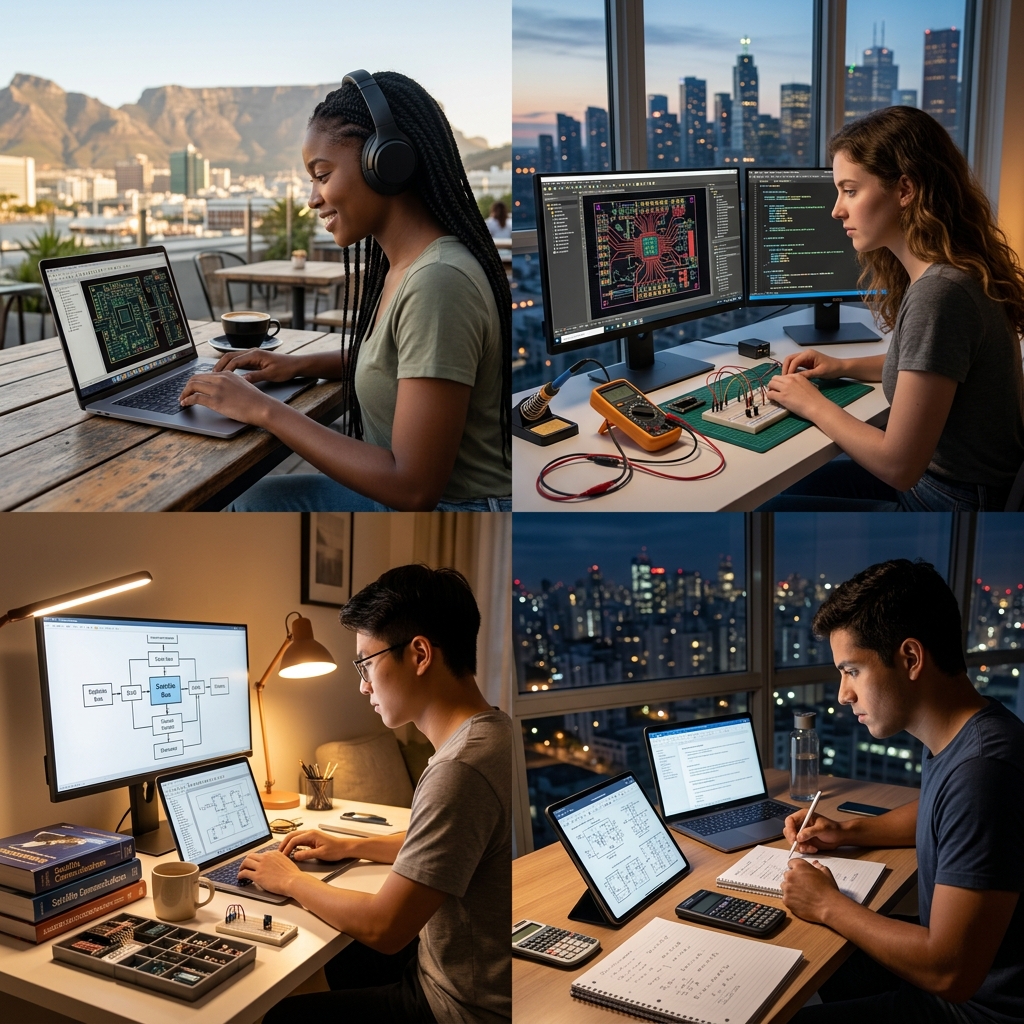
Orbital mechanics, space environment, subsystem architecture, and KiCad. Culminates in your Preliminary Design Review (PDR).
Bootcamp 1: Design Residency
Schematic review, component selection, interface control documents. Your team meets in person for the first time in Strasbourg.
Online Phase 2: Detailed Design
Multi-layer PCB design, embedded firmware, manufacturing file preparation. Culminates in your Critical Design Review (CDR).
Bootcamp 2: Build Residency
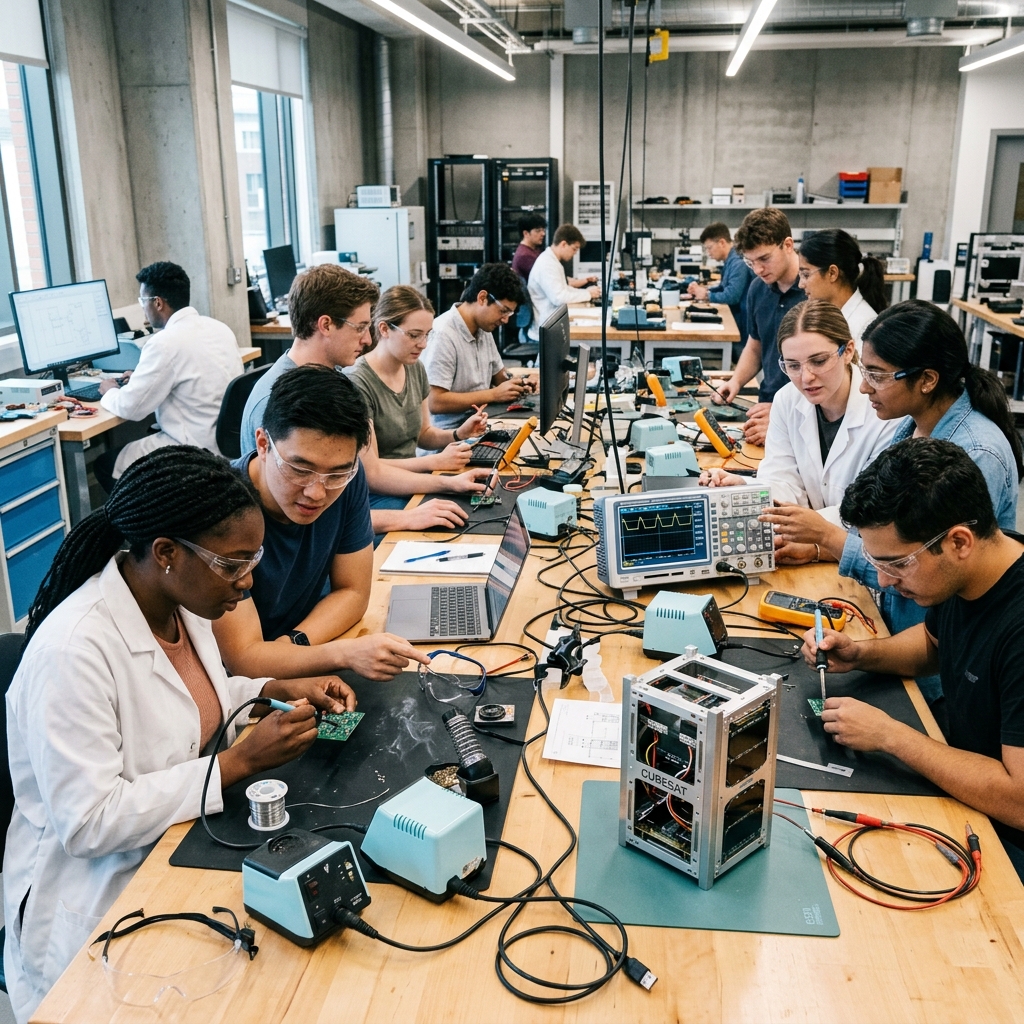
Receive your PCBs. Solder. Assemble. Debug. Test. Three weeks of intensive hardware work in ISU's labs.
Online Phase 3: Testing & Documentation
Test procedures, firmware validation, ground station operations, mission planning. Technical report writing.
Bootcamp 3: Integration & Flight Readiness
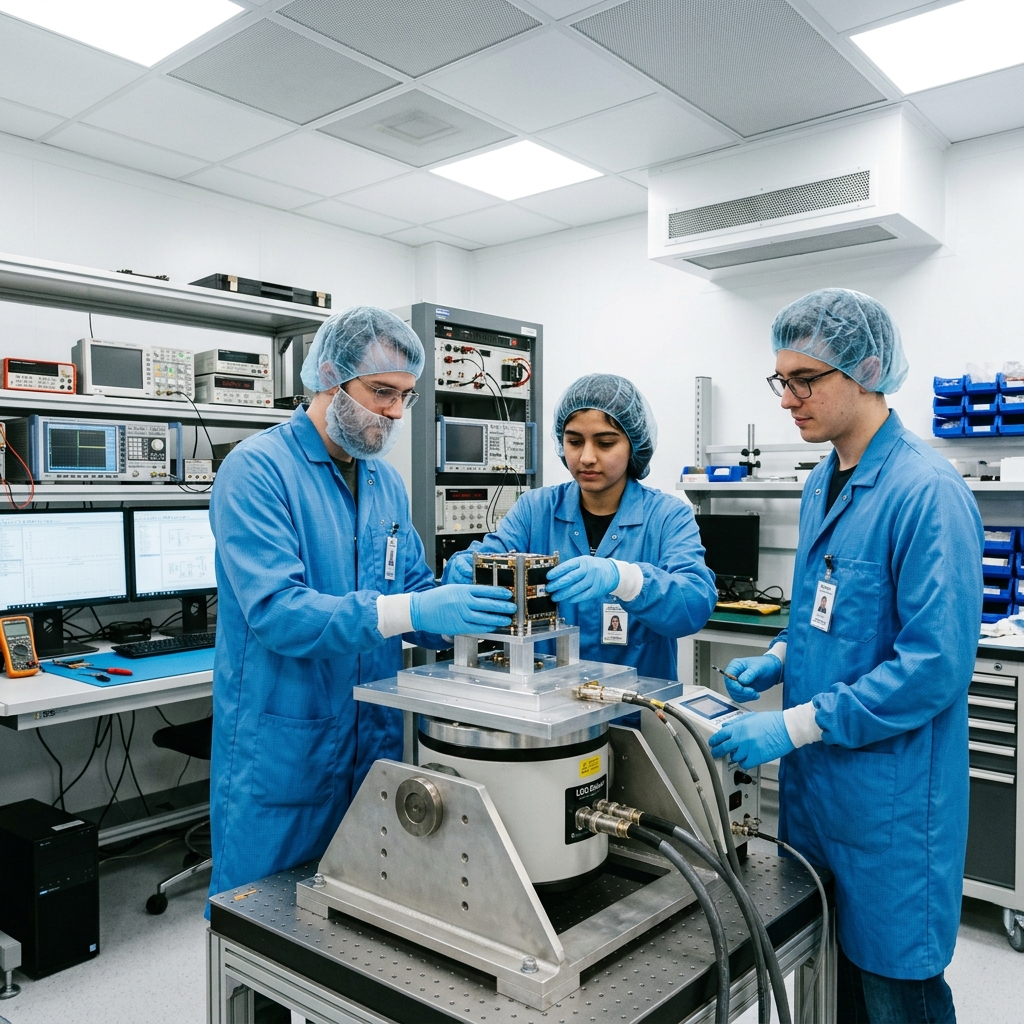
System integration, day-in-the-life simulation, Flight Readiness Review, certificate ceremony, and mission patch reveal.
Launch Day
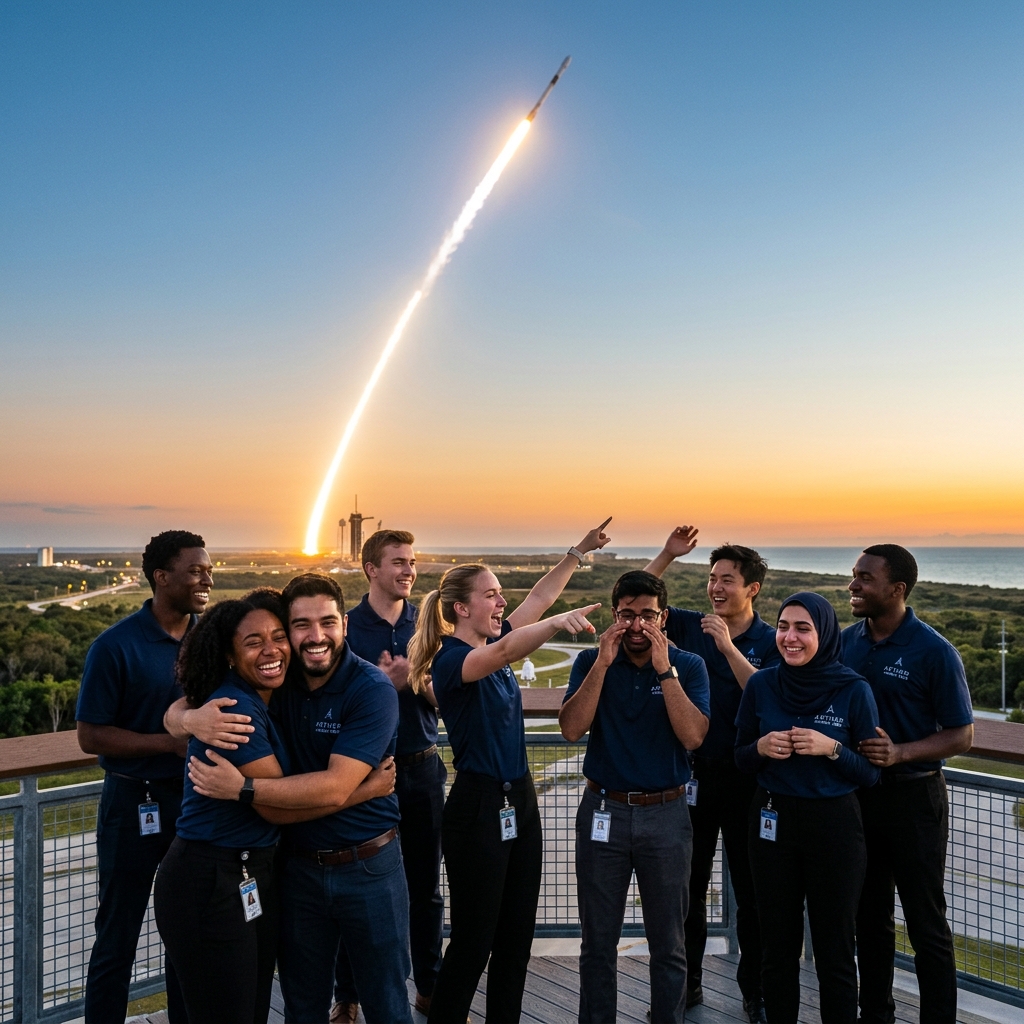
Your satellite flies. Your team watches it go. The mission you built from scratch leaves Earth. This is the moment.
Five Missions. Five Stories.
Each cohort is a narrative. Each mission serves a community. One is funded by the world. One serves ISU's own backyard.
Africa to the Stars
Africa has 54 countries. Only 11 have launched a satellite. The continent most affected by climate change has the least ability to monitor it from orbit. This cohort changes that.
10 African engineers will design and build the first collectively engineered African CubeSat at ISU. They return home carrying the technical DNA to start their nation's space program.
Artemis Engineers
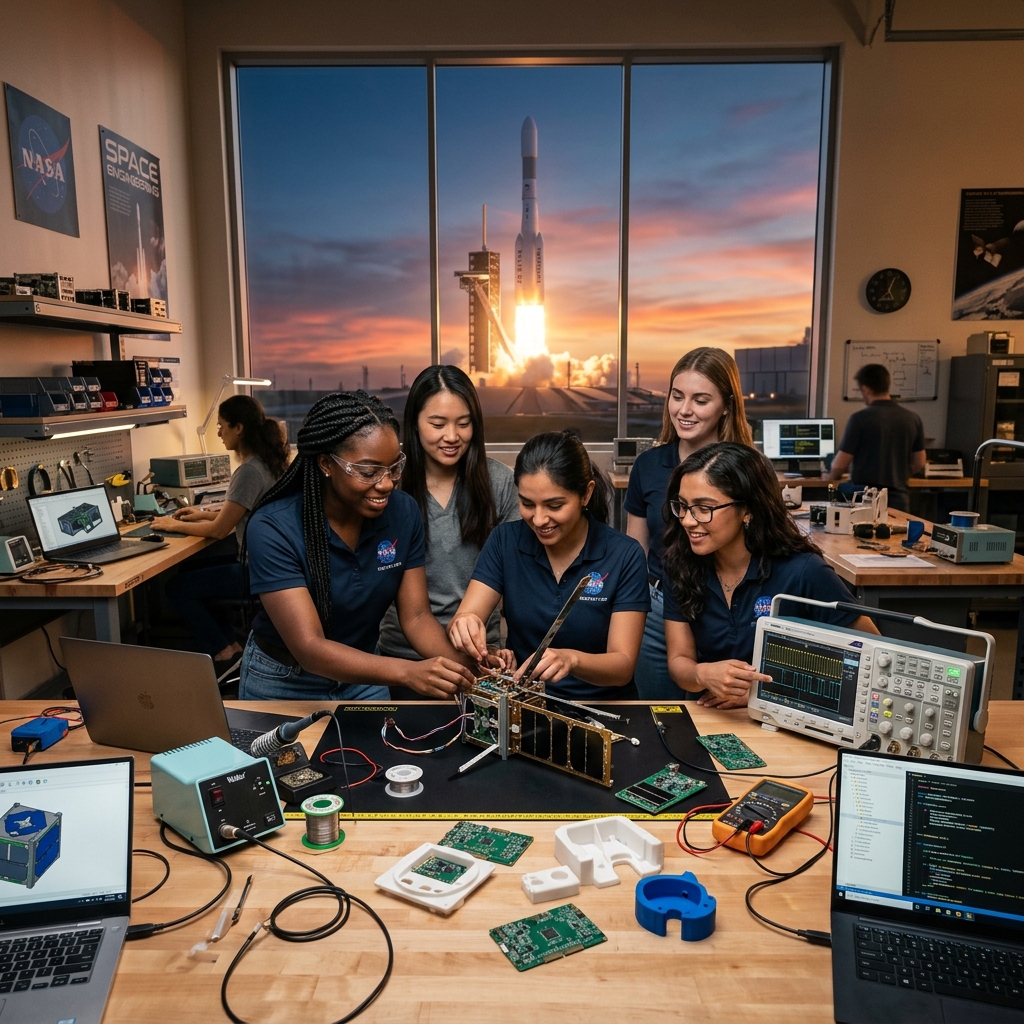
In electrical engineering, women make up less than 15% of students. In CubeSat hardware labs, closer to 5%. This cohort will be the first all-women team to design, build, and fly a CubeSat from a European institution.
Not because women need special treatment, but because the field needs to see what they can do.
Outre-Mer en Orbite
France launches Europe's rockets from Kourou, but no one from French Guiana has ever built a satellite. The DOM-TOM territories (Martinique, Guadeloupe, Réunion, French Polynesia) face cyclones, rising seas, and coral bleaching with no orbital eyes of their own.
This is not foreign aid. These are French citizens. This is France investing in France.
Postcards from Orbit
Open to anyone, anywhere. No restrictions. No quotas. Just talent and drive. This is the people's satellite, funded not by institutions, but by 50,000 people who each pay to have their coordinates photographed from space.
Users submit GPS coordinates. The satellite photographs their location on its next pass. They receive a timestamped orbital image: their home, their school, their farm, seen from space. A personal connection to orbit.
Bretzel en Orbite
ISU has been in Strasbourg for over 30 years. Not one satellite has been built to serve the city that hosts it. The Alsace cohort changes that. Ten engineers from the Grand Est region will build a CubeSat that monitors the air their neighbors breathe, the vineyards that define their landscape, and the Rhine wetlands that sustain their ecosystem.
For the first time, Alsace will have its own eyes in orbit, built by its own people.
The Combined Ask: Five satellites. Five communities. Fifty engineers trained for free. One orbit. €2.5M total. Zero tuition.
The Investment
Five satellites. Five communities. Fifty engineers. One number.
Total investment for 5 CubeSats, 50 engineers, and 5 orbital missions
€500,000 per cohort · 10 students per cohort · €50,000 per student · €0 tuition
Cohort 4 (Postcards from Orbit) is fully crowdsourced
🔧 Where Each €500K Goes
🌍 What 50 Engineers Means
10 engineers return home with the technical DNA to start a national CubeSat program. Countries that currently import all satellite data could begin producing their own drought alerts, crop monitoring, and disaster response from orbit.
10 women with ISU certificates and flight mission credits on their CV enter a field where they are under 5% of hardware engineers. They become visible proof that the pipeline exists.
10 French citizens from Guadeloupe, Martinique, Réunion, and Guyane build and fly an AIS fishing detection satellite. The territories that host Europe's spaceport finally build something that flies from it.
10 engineers from anywhere, funded by 50,000 people who each paid €10 to own a piece of a space mission. The first crowdsourced CubeSat where backers receive personal orbital photographs of their coordinates.
10 engineers from the Grand Est region build a satellite that monitors air quality in the Eurométropole, tracks vine health along the Route des Vins, and watches over the Rhine wetlands. ISU's own backyard, served by ISU for the first time in 30 years.
Sponsorship Tiers
Corporate and institutional partners get more than a logo. They get a pipeline.
Platinum: Mission Sponsor
€100,000+. Your logo on the satellite. Named mission. First access to recruit graduates. Your brand, in orbit.
Launch PartnerGold: Cohort Sponsor
€50,000. Sponsor one full student. Named scholarship. Recruitment access and mentorship role. Visible impact.
Named ScholarshipSilver: Subsystem Sponsor
€25,000. Own a subsystem team. Provide mentorship. Your engineers guest-lecture. Your brand associated with real hardware.
Mentorship RoleWhy CEAP?
No other program sits where we do: hands-on hardware with global hybrid access.
| Feature | ISU CEAP | GMU Certificate | CU Boulder | Online (KSF) |
|---|---|---|---|---|
| Hands-on flight hardware | ✓ | ✓ | Partial | ✗ |
| Hybrid delivery (online + bootcamp) | ✓ | ✗ | ✗ | Online only |
| Flight mission included | ✓ | ✗ | ✗ | ✗ |
| Global cohort (30+ nationalities) | ✓ | ✗ | ✗ | Partial |
| ESA/CNES ecosystem access | ✓ | ✗ | ✗ | ✗ |
| Duration | 12 months | 2 semesters | 1 year | Self-paced |
| Typical cost | €50,000 | ~€15,000 | ~€18,000 | ~€2,000 |
Faculty
Two ISU resident faculty lead the program, supported by a global network of guest lecturers from industry and space agencies.
For Sponsors & Partners
Everything you need to evaluate, present, and champion Mission Hatch within your organization.
White Paper
The full case for CEAP: market analysis, financial model, cohort narratives, launch pathways, and sponsorship framework. 10 sections. Print-ready.
Read White PaperPitch Deck
A 10-slide visual presentation designed for boardrooms, donor meetings, and internal approvals. Key numbers, cohort stories, and the ask.
View Pitch DeckContact
Ready to discuss sponsorship, partnership, or have questions about the program? Reach the Program Director directly.
Email Dr. SounnyEvery Cohort Hatches a Mission.
Whether you are an engineer ready to build, a company ready to sponsor, or a foundation ready to invest in the next generation, there is a seat at this table.