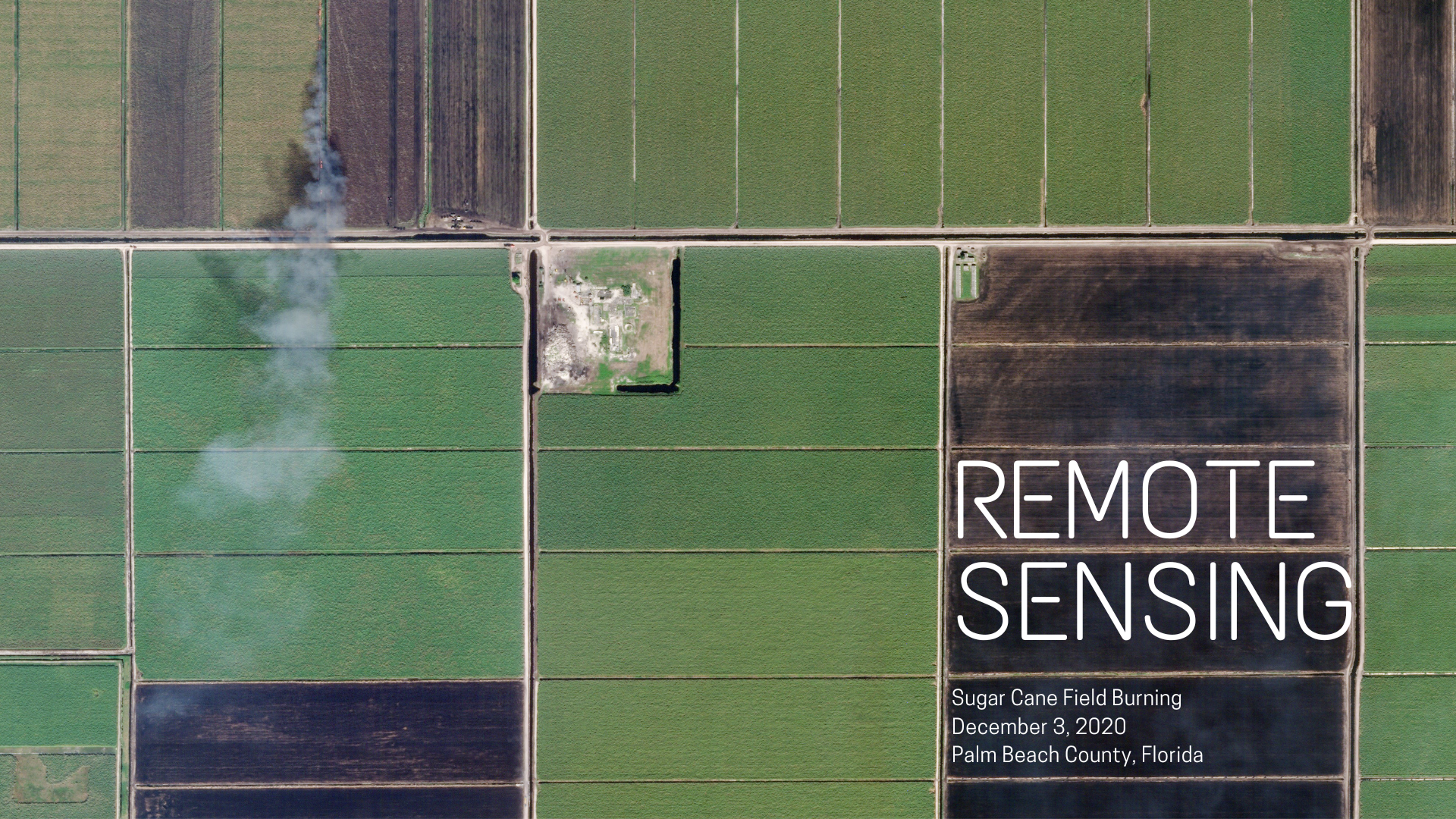
Remote Sensing Course Banner
Let's Go! 🚀

Remote Sensing with Google Earth Engine

Remote Sensing is the art of digital image processing. It is not merely a technological endeavor. It's a harmonious blend of cutting-edge technology and human wisdom, aiming to unravel the intricate layers of our planet. It promotes a deeper understanding of the Earth's system and fosters an innovative approach to geographic studies. The confluence of sensors, artificial intelligence, big data, and human intellect offers a dynamic and flexible framework, making remote sensing an indispensable tool in modern geography and related fields. This approach embodies the spirit of integration, innovation, and human-centered discovery, paving the way for a more informed and sustainable future.

Schedule

Week Topic Readings Labs
0

Welcome to Remote Sensing

Welcome to Remote Sensing

The Earth Engine API

Why JavaScript

Lab 1 - Getting Started with GEE

Lab 2 - Hello Landsat!

1

JavaScript Basics

Additive Color System

Introduction to JavaScript

Variables

Lists

Objects

Functions

Comments

Client vs Server Objects

Introduction to Additive Color System

Lab 3 - JS Basics

Lab 4 - Night time Lights

Lab 5 - Challenge Refreshers

2

Image Collections

Image Manipulation: Band Arithmetic and Thresholds

Image Collections

Google Earth Engine Data Catalogs

Image Manipulation: Band Arithmetic and Thresholds

Image Operations

Spectral Indices

NDVI

Understanding Scale

Cloud Masking

Lab 6 - Image Collections / Filtering / Sorting

Lab 7 - Challenge - Finding a dataset for your Site

Lab 8 - Band Arithmetic - NDVI

Lab 9 - Thresholds

Lab 10 - Challenge - Mapping the Urban Areas

3

Land Cover Classes and Supervised Classification

Unsupervised Classification

Introduction to Image Classification

Discrete vs Continuous Data

Unsupervised vs Supervised vs Object Based

Land Use Versus Land Cover

History of Image Classification

Unsupervised Classification

Accuracy Assessment

Lab 11 - Supervised classification

Lab 12 - Unsupervised Classification

Lab 13 - Improving your Classifications

4

Interoperability, Elevation Modeling, Visualizations, and Reducers

Reducers and Aggregations

Temporal Compositing

Exporting Data

Batch Exports

Export Best Practices

Lab 14 - Interoperability with GEE - Exporting to ArcGIS Pro

Lab 15 - Visualizing SRTM Data

Lab 16 - Zonal Statistics

5

Intermediate Analysis: Time Series, Change Detection, and Joins

Time Series Charting and Trend Analysis

Change Detection

Advanced Joins and Filtering

Lab 21 - Change Detection

Lab 22 - Time Series Charting

6

Remote Sensing Applications Case Studies

Remote Sensing Applications Case Studies

Lab 17 - Health Applications Part 1 - Preparing Data for Analysis

Lab 18 - Health Applications Part 2

7

Engaging with the Public

Public Engagement Overview

Science Communication Guide

UI Widgets

Interactive App Examples

Publishing Apps

Lab 19 - Making Gifs and Videos of Environmental Change

Lab 20 - Design UI/UX and Deploying Google Earth Engine Apps

8

RS Application 1 - River Morphology

Theory

Part 1

Part 2

Part 3

Part 4

Part 5

RivWidthCloud

9

RS Application 2 - Global Snow Observatory

Introduction

About MODIS

Our Process

Creating Image Collections

Joining Collections

Masking

Reclassifying

Calculating Snow Cover Frequency

Trend Analysis

Visualization

Disseminating

10

RS Application 3 - Heat Islands

Introduction

Data (MODIS)

Analysis (Landsat)

Results (Toolbox)

Discussion (Urban/Rural)

Conclusion (SUHI)

11

RS Application 4 - Fire

Introduction

Theory

Fire Datasets

About the Fire

Adding Data & Making a UI

12

RS Application 5 - Hydrology and Water Mapping

Water Mapping with Spectral Indices

JRC Global Surface Water

Lab 23 - Water Mapping

13

RS Application 6 - Deforestation and Forest Monitoring

Deforestation Monitoring with Hansen GFC

Lab 24 - Deforestation Analysis

14

RS Application 7 - Agricultural Monitoring

Agricultural Monitoring and Crop Phenology

Lab 25 - Agricultural Monitoring

15

RS Application 8 - Urban Analysis

Urban Remote Sensing

Lab 26 - Urban Analysis

16

RS Application 9 - SAR / Radar Remote Sensing

SAR Fundamentals

Lab 27 - SAR Flood Mapping

17

Future Directions in Remote Sensing

Overview

Bibliography

18

Research Methodology and Doing Research with Remote Sensing

Doing Research with Remote Sensing

All Labs

Assignment Submission

How to Submit Your Work

All lab assignments and projects should be submitted via email.

Submission Guidelines:

  • Subject line should include: Lab [Number] - [Your Name]
  • For Google Earth Engine scripts, include the shareable link from GEE Code Editor
  • For written assignments, attach as PDF
  • Include screenshots demonstrating your work where applicable
  • Submit before the deadline specified in the course schedule